Hormonal Signalling
The HPA Axis: Stress Hormones, Feedback and Research Models
The hypothalamic-pituitary-adrenal axis coordinates endocrine responses to stress. Explore the experimental methods, interpretation limits and open questions that shape this field.
7 November 2026 · 4 min read · Novaryn Labs
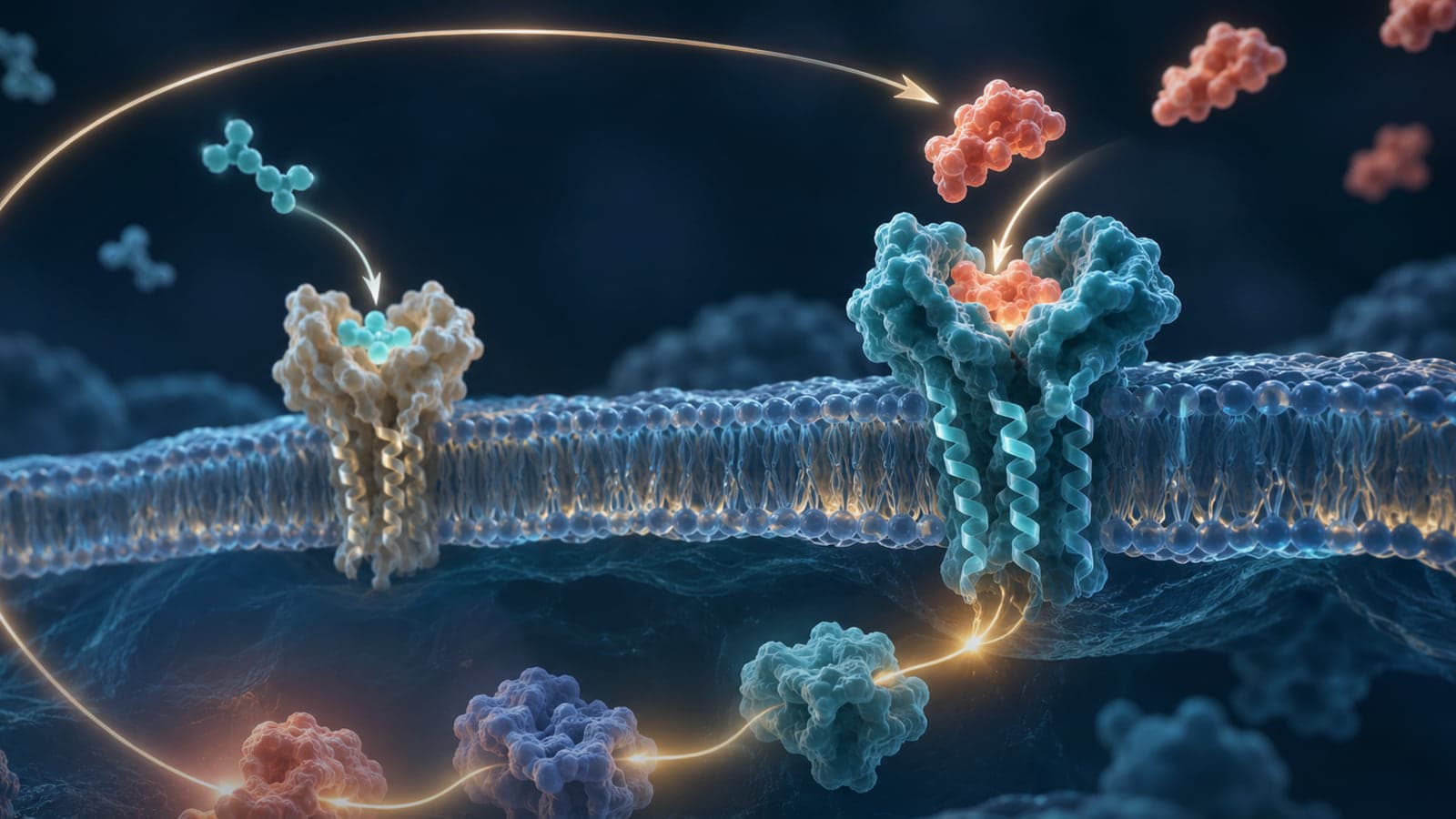
The hypothalamic-pituitary-adrenal axis coordinates endocrine responses to stress. Hypothalamic CRH supports pituitary ACTH release, which stimulates adrenal glucocorticoid production and subsequent feedback.
The important research question is not whether hpa axis can be attached to a broad biological claim. It is which molecular event was measured, in what model, over what timescale and with which controls. This guide develops that distinction so readers can move from an attractive mechanism to a testable interpretation.
Novaryn Labs presents this material as scientific education for laboratory and analytical work. It does not provide personal-use instructions, medical guidance or a substitute for reviewing the complete methods and limitations of the cited literature.
The core scientific idea
Glucocorticoids feed back through receptors in the brain and pituitary, helping limit and shape the response.
The axis has circadian and ultradian rhythms, so timing affects both baseline measurements and responses to a challenge.
Acute adaptive responses and chronic dysregulation are different experimental states and should not be collapsed into one stress label.
Together, these points show why hpa axis cannot be reduced to one marker or diagram. A convincing experiment defines the molecular species, the biological or analytical context and the endpoint before interpreting a change. That discipline also makes apparently conflicting findings easier to compare.
How researchers investigate hpa axis
No single method captures identity, mechanism and function at once. Strong projects combine measurements that fail in different ways, then ask whether the results support the same explanation.
Serial hormone sampling across circadian phases
Serial hormone sampling across circadian phases can establish a defined part of the hpa axis question. Researchers should state the sample, comparator, timing and acceptance rule before collecting data. Replication across independent preparations helps distinguish a repeatable signal from instrument drift or one unusual sample.
Standardised challenge and recovery paradigms
Standardised challenge and recovery paradigms adds a second view of the same system. Its strongest use is alongside an orthogonal measurement that relies on a different physical or biological principle. Agreement is informative; disagreement is equally useful because it reveals where identity, timing or model assumptions need closer examination.
Receptor and feedback studies across multiple axis levels
Receptor and feedback studies across multiple axis levels connects the molecular observation with a broader experimental outcome. Controls should include the untreated system, an appropriate positive or process control and checks for assay interference. The method should be interpreted within its validated range rather than extended beyond the data.
What the evidence can and cannot establish
- Interpretation limit one: sampling itself can activate the axis
- Interpretation limit two: single cortisol measurements have limited mechanistic resolution
- Interpretation limit three: species and sex differences can alter timing and feedback
For hpa axis, these limits do not make the research uninformative. They define the boundary of the conclusion. Evidence about a purified molecule can be strong evidence about that molecule, while remaining incomplete evidence about a cell. A cellular response can be reproducible without predicting a whole organism. Human observations can identify an association without resolving the molecular cause.
The most reliable reading of hpa axis therefore follows an evidence ladder. First confirm identity and measurement performance. Then ask whether perturbing the proposed mechanism changes the endpoint. Finally, look for replication in models that add relevant complexity. Each step should preserve the uncertainty of the step before it.
Current research questions
Is an altered value caused by secretion, clearance or feedback?
Answering this requires a design that separates the proposed mechanism from correlated changes. Time-resolved measurements, matched controls and a clear definition of the primary endpoint are more informative than collecting many endpoints without a decision rule.
How quickly does the axis recover after a controlled challenge?
This question often needs more than one model. A reductionist assay can isolate mechanism, while a more complex system can test whether that mechanism remains important when feedback, metabolism and competing pathways are present.
Frequently asked questions
What is hpa axis?
The hypothalamic-pituitary-adrenal axis coordinates endocrine responses to stress. The term is useful only when the molecular process and experimental context are stated clearly.
Why do researchers study it?
Researchers study hpa axis because it connects measurable molecular events with wider questions in hormonal signalling. It also provides a way to test how structure, timing or analytical conditions alter an observed result.
How is it measured?
Common approaches include serial hormone sampling across circadian phases, standardised challenge and recovery paradigms and receptor and feedback studies across multiple axis levels. These methods answer different questions and are strongest when used together.
What is a common interpretation mistake?
A common mistake is assuming that sampling itself can activate the axis. A study can be technically sound while supporting a narrower conclusion than its headline suggests.
Does laboratory evidence prove a human outcome?
No. Molecular, cell and animal studies can establish mechanism within their models, but translation requires appropriately designed human research. Even human studies must be interpreted within their participants, endpoints and follow-up period.
What should be checked before comparing two studies?
Check the molecular material, model, comparator, timing, primary endpoint and analytical method. Differences in any of these can explain why two studies that appear to address hpa axis reach different results.
Related research
Continue with Endocrine Feedback Loops: How Hormonal Systems Regulate Themselves and Circadian Clocks in Cell Biology. These guides approach the same research area from complementary structural, biological or analytical perspectives.
Scientific references
- Nunez SG, Rabelo SP, Subotic N et al. (2025). Chronic Stress and Autoimmunity: The Role of HPA Axis and Cortisol Dysregulation. International journal of molecular sciences. DOI: 10.3390/ijms26209994.
- Herman JP, McKlveen JM, Ghosal S et al. (2016). Regulation of the Hypothalamic-Pituitary-Adrenocortical Stress Response. Comprehensive physiology. DOI: 10.1002/cphy.c150015.
- Mbiydzenyuy NE, Qulu LA (2024). Stress, hypothalamic-pituitary-adrenal axis, hypothalamic-pituitary-gonadal axis, and aggression. Metabolic brain disease. DOI: 10.1007/s11011-024-01393-w.
Questions about anything in this guide?
Message the team on WhatsApp for product, batch or documentation questions. We can't give dosing or medical guidance.
For laboratory research use only. Not for human or veterinary consumption. Nothing in this article is medical advice.